Height Adjustable Desks: More Than Just Standing at Work
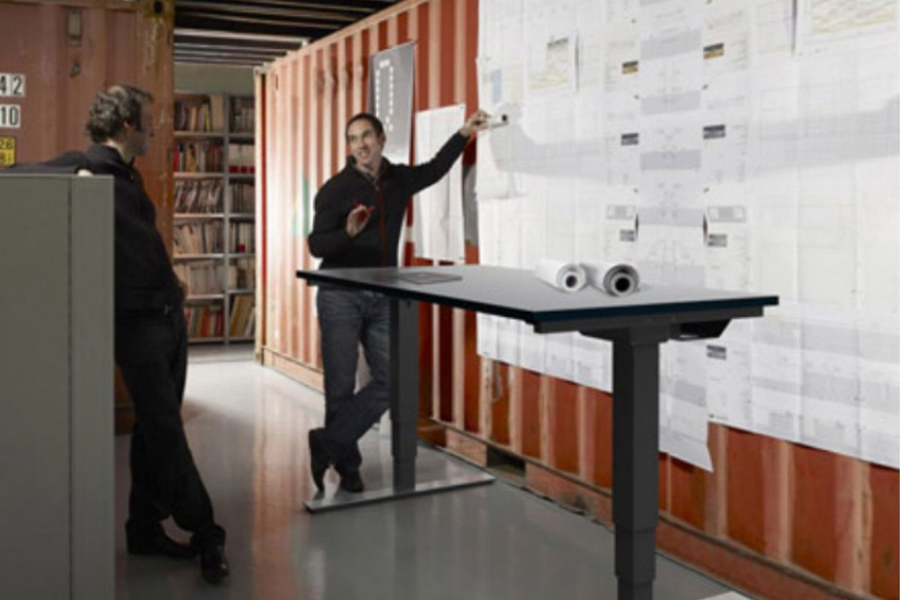
There was a time when a height adjustable desk meant a hand crank, a bit of effort, and a very slow change from sitting to standing.
In the 1970s, many height adjustable desks were operated manually. You turned a crank handle, adjusted the frame, and eventually got the desk to the height you needed. As technology improved, motors, shaft drives and gearboxes started to do the heavy lifting.
Today, height adjustable desks have come a long way.
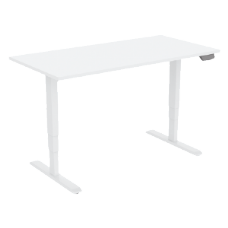
Modern electric sit-stand desks usually use actuators built into each leg. These small motors convert electrical energy into smooth, controlled movement, allowing the desk to move up and down at the touch of a button. Better quality systems offer more precise height adjustment, improved stability and more efficient power use.
That matters, because a height adjustable desk is not just a piece of furniture. When chosen properly and used well, it becomes part of a healthier and more flexible workstation.
Sitting Less, Moving More
Most of us know we sit too much.
We sit at the desk. We sit in meetings. We sit in the car. Then, when the working day is done, many of us sit again at home.
The issue is not that sitting is always bad. The problem is staying in the same position for too long. A full day of desk work can leave the body feeling stiff, tired and heavy, even when the work itself has not been physically demanding.
That is where a height adjustable desk can help.
The goal is not to stand all day. Standing for hours on end can create its own problems, particularly through the feet, legs, lower back and hips. The real benefit is choice. A good sit-stand workstation allows you to sit, stand, shift position and move more naturally throughout the day.
In simple terms: the best posture is usually the next posture.
A Standing Desk Is Not a Magic Fix
It is easy to oversell standing desks.
A height adjustable desk will not automatically make someone healthier, fitter or pain free. If the monitor is too low, the keyboard is too far away, the desk is unstable or the person stands in one rigid position all day, the workstation can still create problems.
The value comes from how the desk is used.
A good routine might look like sitting for part of the morning, standing for a phone call, sitting again for focused work, standing for a short task, then walking away from the desk for a few minutes. Small changes across the day are usually more realistic than trying to force a perfect routine.
The best sit-stand desks support movement, not just standing.
Why Quality Matters
Not all height adjustable desks are the same.
In a commercial workplace, the desk needs to do more than move up and down. It needs to carry the full workstation safely and comfortably. That may include one or two monitors, a monitor arm, laptop stand, docking station, keyboard, mouse, task lighting, paperwork, cable management and other accessories.
This is why lift capacity matters.
A desk that works well with a small laptop setup may not be suitable for a larger workstation with dual screens and multiple accessories. If the frame is underpowered or poorly built, it may wobble, struggle with the load or become frustrating to use.
For workplace environments, commercial-grade furniture is usually the better investment. It is designed for regular use, repeated adjustment and the demands of a proper office setup. Stability, motor quality, frame strength, safety features and warranty support all become important.
A desk that looks good in a brochure still needs to perform every day.
Getting the Setup Right
The desk is only one part of the workstation.
To get the most out of a height adjustable desk, the rest of the setup needs to work with it.
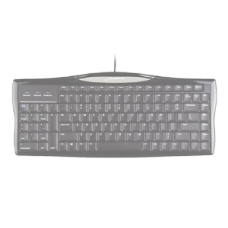
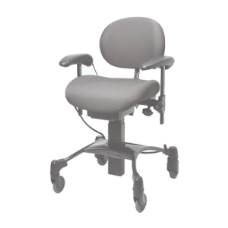
When sitting, the user should be able to work with their feet supported, shoulders relaxed, elbows close to the body and the keyboard and mouse within easy reach. The screen should sit at a comfortable height and distance so the neck is not constantly craning forward or looking down.
When standing, the same principles apply. The desk height should allow the shoulders to stay relaxed, with the keyboard and mouse at a comfortable level. The screen should still be positioned so the user can look ahead without lifting the chin or dropping the head.
If the monitor stays too low when the desk is raised, the user may end up standing but still bending the neck. If the keyboard is too high, the shoulders may lift and tighten. If the mouse is too far away, the arm and neck may work harder than they need to.
A height adjustable desk works best when it is planned as part of the whole workstation, not treated as a standalone item.
Sit, Stand, Move
The healthiest workstation is not one that forces a person into one "correct" position all day.
It is one that allows variation.
That might mean:
- sitting for detailed work
- standing for short tasks
- moving during phone calls
- walking between meetings
- changing posture before discomfort builds
- using the desk adjustment regularly enough that it becomes a habit
This is the part many workplaces miss. They invest in the desk, but do not help staff understand how to use it properly.
A sit-stand desk should not become a normal desk that happens to have a motor. It should be used as a prompt to move more often.
Choosing the Right Height Adjustable Desk
When choosing a height adjustable desk, it is worth looking beyond the basic size and colour.
The right desk should suit the person, the work being done and the equipment being used.
Consider:
- the required lift capacity
- the size of the desktop
- whether the user needs one screen or two
- whether monitor arms will be fitted
- how cables will be managed
- how stable the desk is at full height
- whether the controls are simple to use
- whether memory height settings are needed
- the quality of the frame and motors
- the commercial warranty and support
- the finish, colour and suitability for the office environment
There are now many options available, including standard colours, designer finishes, recycled timber tops and different desktop sizes. That gives businesses the chance to choose a desk that suits both the ergonomic requirements and the look of the workplace.
But the most important question remains practical: will this desk support the way the person actually works?
A Better Way to Work
A height adjustable desk is not about turning the office into a gym.
It is about reducing long static postures and giving people more freedom to work comfortably. It allows the workstation to adapt to the person, rather than forcing the person to adapt to the furniture.
Used properly, sit-stand desks can support better posture, encourage more movement and help create a healthier office environment.
For employers, that can mean a workplace that feels more flexible, more considered and more supportive. For staff, it can mean less time locked into one position and more opportunity to move before stiffness and fatigue set in.
The key is to choose the right desk, set it up properly and use it as part of a broader ergonomic workstation.
At Ergonomics 101, we believe good office furniture should do more than fill a space. It should support the people using it every day.
A well-selected height adjustable desk does exactly that. It gives workers the option to sit, stand and move through the day — and that is a much better starting point for a healthier way to work.